
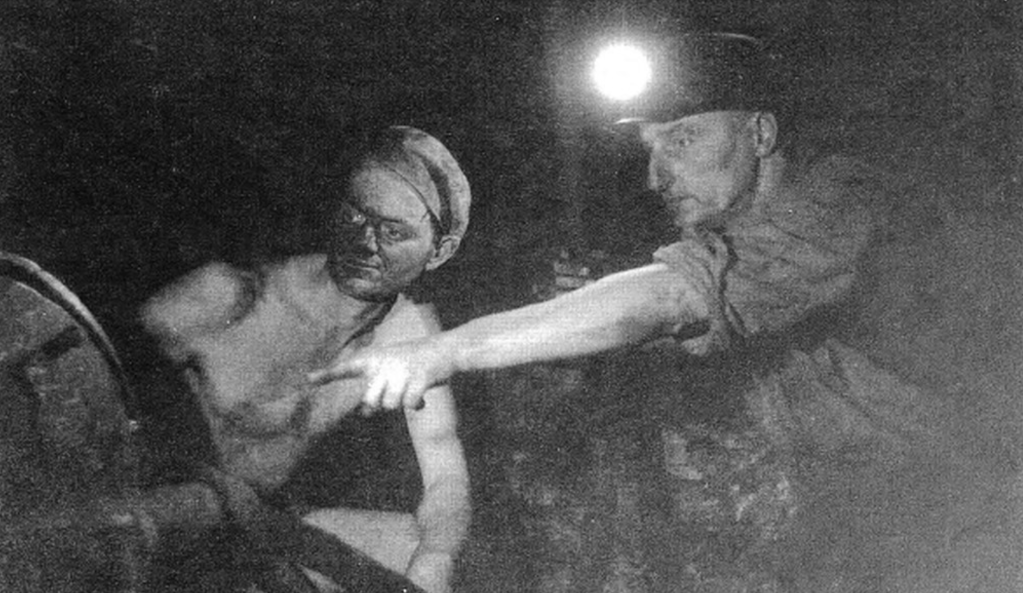
CREDIT: SLIM HEWITT/HULTON GETTY
Abridged research findings from Rev Dr Cris Rogers on the training of working-class Priests in the Church of England.
Project scope.
The research project aimed to find out what were the distinctive challenges of working-class (WC) candidates, ordinands and Priests in the present CofE discernment, training and deployment for curacy. The project looked at the effects this had on the WC and what alternative training could be offered by the CofE. As part of the research 498 working-class individuals were involved in online questionnaires, semi-structured focus groups and one-to-one interviews.
Summary of Major Findings
The following findings and recommendations are taken from “Jesus called the working-class: Models for training working-class church leadership” Doctor of Ministry research conducted in 2023 under Asbury Seminary Kentucky.
Findings of personal experiences of working-class candidates and priests in CofE.
- There is a feeling amongst WC Priests and candidates that there are negative perceptions of working-class candidates (articulating that they feel seen as risky, misunderstood, unconventional, afterthoughts) and feeling patronised/looked down upon during the discernment process.
- Challenges in the selection process: WC feel they have to fit into a middle-class mould, with academic barriers, and discrimination due to cultural misunderstandings, which leads to mental health impacts. It was also challenging in terms of shift work and the selection process, especially for those on night shifts.
- Challenges in training: Academic demands, financial constraints, feelings of inadequacy, classism from middle-class trainers, work-life balance issues, lack of relatable role models, and pressure to conform.
- Financial limitations and family/caregiving responsibilities as major barriers.
- Feeling like an outsider with no social capital, having to code-switch and adapt to middle-class norms.
- Education style (essays, readings) is a barrier for those without a higher education background.
- Culture clash between working-class backgrounds and middle/upper-class academic norms.
- Major struggles around feeling having to culturally adapt in terms of speech, dress, and personality to conform, leading to identity loss. 35% of candidates spoke about changing their dress code and humour to try to fit in and then no longer feeling like they fit in their own community.
- Over 35% of those interviewed talked about their experiences of being told that they just needed to change and get on with the system.
- Hands-on, practical learning methods are more effective for working-class students.
- The feeling of not having a champion that gets their culture and background as WC.
- Feeling there were few opportunities in urban contexts to work with relatable leaders. Incumbents with placement students tended to be more Middle Class and didn’t appreciate the candidates’ WC background.
- Over half of those interviewed articulated how this culture mismatch had led them to mental health challenges and want to give up.
Five major findings emerged from the analysis of the data produced from the study.
1. Apprenticeship and contextual learning are strongly preferred. Hands-on ministry training and location-based education were repeatedly advocated as optimal for working-class candidates.
2. Mentoring and spiritual formation are vital but overlooked areas. Experts emphasised the need for affirming mentors and leadership character development, which traditional training often minimises.
3. Academia remains a major barrier. Experts consistently critiqued rigid academic requirements and pacing as misaligned with working-class realities. Workshops often worked better than block teaching sessions.
4. Customisation and flexibility are essential. Tailoring training to individuals’ capabilities and realities was urged through varied assessment, pacing, and entry requirements.
5. Educators must further their understanding of the cultural dynamics of the working-class. Educators were exhorted to examine biases, adapt methods, and empower working-class gifts and wisdom.
Ministry Implications of the Findings
Based on the findings from this research study, I recommend the following ministerial implications regarding enhancing the selection, training, and deployment of working-class church planters. While some suggestions aim to expand current initiatives, I also propose implementing new practices or amending existing programmes to better equip working-class leaders based on the evidence presented. These recommendations are organised under the categories of improving selection processes, transforming training systems, and optimising deployment models to present a comprehensive framework for empowering working-class planters emerging from this project’s analysis.
Improving Selection Processes
(1) Long application forms should be changed to allow candidates from low literacy backgrounds to not stumble at the first point of entry. The application form should be divided into shorter sections which they fill out over a year period when working with the DDO’s rather than one, long process. This process is already being used in some Dioceses. Alternative options include:
a) the use of video/audio applications which would allow candidates to film or record video responses to questions instead of writing essays. This approach would also offer a useful way to assess non-written communication skills.
b) conversation-based application processes, rather than filling out forms, would allow candidates to meet with a discernment mentor for question-and-answer verbal form filling. This route would bring out longer answers and the discernment mentor can vet what is needed.
(2) To ensure accessibility for all candidates the following are needed,
a) first contact meetings between the candidate and The Diocesan Director of Ordinands or representative should be conducted in a local context, café, pub, or community space not only to relax the intensity but to also allow the candidate to show off their context.
b) financial assistance, pre-paid travel, or accommodations should be made available to those who need it. The research found some working-class candidates found getting to selection meetings with no car meant they could not get home on public transport in remote areas at night.
c) support in managing shift work and family commitments alongside the selection process, especially for people living in remote areas, is a clear need. Such assistance could include offering scheduling flexibility, covering, or subsidising travel costs to attend selection meetings and providing childcare support during discernment activities.
Making these resources available where required would help reduce practical obstacles that could preclude otherwise capable working-class candidates from fully participating in the discernment journey due to financial limitations or caregiving duties.
(3) It is essential that selectors receive training to recognise and value diverse types of intelligence, leadership potential, and ministry gifts rather than paying attention only to academic abilities. Selectors must also be proactive about avoiding pre-judgments of candidates’ suitability based on assumptions or unchecked biases. Additionally, selectors need an enhanced understanding of the immense pressures working-class candidates face to adapt their self-presentation and conform to perceived expectations of acceptability. Formal unconscious bias training is needed to equip selectors to look beyond academic performance and welcome candidates expressing their authentic selves.
(4) The Diocesan Director of Ordinands and vocational selectors needs to make the process more transparent and supportive with clear expectations communicated in plain language to encourage candidates. They also need to seek to reduce perceptions of intrusiveness and pressure to conform by ensuring the selection journey feels empowering rather than intimidating. This can be done by proactively communicating with the candidates, encouraging them to wear clothes they find comfortable and to use their own style of speech to articulate themselves. This also includes being clear on the length of time for the selection process, how many times they will be expected to meet with chaplains, etc.
(5) The Church of England should intentionally recruit working-class chaplains to selection panels to add their insights and thereby reduce middle-class bias. Candidates should be assigned a working-class priest as an advocate to both to speak up for them and to reflect to them any misunderstandings in the process.
(6) To overcome the working-class perception that they are ‘risky’ and unwanted; cultivating a welcoming and inclusive discernment environment is essential, one where candidates can participate authentically without feeling forced to adapt unnecessarily. This environment will include getting the candidates to celebrate their own stories at the beginning of the process. Making introductions, helping them to make connections, and facilitating relationship-building is important. How they feel about the clothes they wear, the language they use, and accepting their sense of humour is essential to them feeling welcome and wanted.
Transforming Training Systems
(7) The Church of England should develop and accredit an apprenticeship-based ordination training program. Working-class adults often learn best through hands-on, practical methods. Training should include interactive workshops, simulations, role-playing, mentoring, and on-the-job training through apprenticeship models. For example, a title focusing specifically on apprenticeship such as ‘Apprenticeship Training for Priesthood’ helps convey the value of this model for developing working-class leaders making it accessible, giving it weight, empowering education, showing flexibility and direct application. Any classroom-based learning needs to explicitly connect lessons to real-life experiences and struggles of the working-class. Any classroom learning should be designed around a workshop structure rather than a lecture format. Assessments should be varied and allow the candidate to show their wide range of gifts and skills alongside developing a portfolio for ministry.
(8) To adequately equip working-class candidates for effective priestly ministry, the training curriculum must incorporate learning across a diverse range of pastoral competencies and practical leadership skills beyond just academic biblical knowledge. Important topics and skills that should be covered within working-class training programs might include the following topics:
- Becoming a priest and spiritual formation,
- Biblical knowledge,
- Character development,
- Pastoral care,
- Counselling,
- Conflict resolution,
- Teaching/preaching,
- Vision casting,
- Strategic planning,
- Volunteer recruitment/development,
- Administration/management,
- Anglican 101
Training should integrate both theological foundations and practical capabilities to ensure working-class priests are empowered to serve their communities. To fully embed working-class priests within the Church of England, training programs must incorporate robust orientation to the institutional operations, governance, and the unique vocabulary of the Church of England. Providing an “Anglican 101” primer early in training will equip less Anglicanised candidates of all backgrounds with a foundational knowledge of national and diocesan administration, governance bodies (like Synod and General Synod), leadership roles, and frequently used acronyms such as ABC, ABM, DSA, SSM, and PCC.
Coursework must move beyond strictly academic learning to build real-world ministry proficiency ending with portfolio building. The outworking of the training should leave the new priest with a portfolio filled with ministry ideas and designed projects to build from.
(9) Leadership development is a long-term investment so the CofE should plan for three years of intensive training as an ordinand followed by several more years of ongoing mentoring relationships. Although a standard curacy would last three years, the recommendation is that the candidate has a mentor committed to them for a period of seven to nine years. Furthermore, for consistency and support, another recommendation would be that the candidate stays in the same context for the full six years of training; three years of direct learning and curacy for a further three years.
(10) Holding training sessions at times and locations convenient for working-class non-stipendiary participants, such as evenings and weekends, is essential. A recognition needs to occur that shift work may result in less consistent attendance, so alternate or repeated options may be needed for non-stipendiary candidates. For full-time candidates, this change is less essential. Training providers might consider hosting training not at theological colleges but at the local Estate churches or community centres as opposed to being in an intimidating academic building. By relocating training to places closer to candidates, rather than expecting them to come to the places of academia, the students’ needs are considered and their engagement will increase.
(11) Training schemes should tailor the approach to each person’s distinctive gifts, abilities, and growth areas. Provide coaching or mentoring as an active part of the training to help apply lessons to their specific leadership context. A strong suggestion would be to offer more models that participants can choose from. For example, if eight modules were run, candidates must sign up to five, meaning they feel the ability to opt out of something being aware that this would obviously also involve core modules.
(12) The gifting already present in the room should be recognised. Using the life learning of the participants shows that their life experience is valuable. By inviting previous students to bring their experience and voice to training, representation is achieved. Educators must take time to understand their gifts, passions, perspectives, and obstacles to participation. With creativity and commitment to developing indigenous leaders, churches can raise up generations of working-class leaders.
(13) For ministry training to effectively equip working-class leaders, educators must enhance their contextual awareness and be willing to modify traditional pedagogies to align with students’ realities. This requires humility in acknowledging middle-class norms pervading theological college curricula that may be unfamiliar and inaccessible for working-class learners. Rather than viewing differences as deficiencies in students, teachers should recognise their own lack of understanding and make needed adaptations. This would involve replacing passive lectures with interactive workshops, swapping theoretical essays for practical assessments, or providing extra coaching to support students in unfamiliar academic environments. Adjusting the training approach involves more listening to student needs, avoiding deficit narratives, and changing mindsets to see diversity as an asset, not a problem to fix. The onus is on instructors to adjust to students, not the reverse.
Key points that educators might cover include:
(1) enhance contextual awareness of working-class needs,
(2) adaption of their methods when student realities do not fit curricula,
(3) have humility in acknowledging middle-class assumptions,
(4) listen to student needs versus imposing one approach, and
(5) make training truly accessible and empowering for all.
Optimising Deployment Models
(14) Multi-year mentoring. As considered in point 9 above, the recommendation is that in following the three-year curacy, the structured relationship continues with the mentor until the ninth year supporting the new priest into church planting or incumbency. This final stage would hold people through the transition in leadership, help them to problem-solve new issues that arise, allow for the continued formation in the priesthood, allow the continued development of skills and wisdom, and allow the priest to feel a part of a wider ministry. Mentors help guide contextualisation and affirm gifts. Candidates will, years later, be able to play this role for another, thereby repaying the significant investment of time.
(15) Curacy’s first incumbencies and church planting opportunities should be matched to priests’ personal giftings and community contexts rather than random allocation or gap-filling of parishes that would traditionally have a curate. This allows ministers to serve in environments where their abilities and experiences best equip them for organic kingdom impact. Working-class priests should be allowed to minister in areas where they culturally understand the setting and can be valued as they are. Whilst unrealistic to expect that the church is able to keep all such priest in their preferred estate, a comparable location should be found unless they desire to change context fully.
(16) Intentionally fostering ongoing peer connections between working-class priests to prevent isolation and create mutual support structures is vital. Often deployed as solo clergy, working-class ministers can feel alone without enough collegial fellowship. Forming communities of practice for cohorts of working-class priests provides regular opportunities for collaborative learning, resource sharing, mentorship, prayer partnership, and friendship. Thriving peer communities reinforce working-class clergy’s cultural strengths of communal relationship and wisdom exchange.
Working-Class Engagement
(17) Peer mentoring of candidates: Working-class priests who have successfully navigated selection and training should make themselves available to mentor and guide other working-class candidates entering discernment. By drawing on their lived experience, they can provide insider coaching to demystify intimidating processes, help candidates avoid common pitfalls, and boost confidence that this path is achievable. Their presence can encourage those who may feel like outsiders in unfamiliar middle-class environments. Intentional peer mentorship, where seasoned working-class priests walk with incoming candidates, creates a pay-it-forward model.
(18) Co-facilitating training: As part of the recommendation for educators to enhance contextual awareness in training programs, working-class priests who understand students’ cultural realities must play an active role in delivery. They should be invited to co-facilitate sessions to model contextual ministry, contribute relevant case studies, and collaborate on adapting teaching methods to resonate with working-class pedagogy. By shifting from passive recipients of education designed for them to empowered co-creators of refreshed curricula, working-class priests can transform training for cultural relevance from the inside out. Their partnership ensures students’ needs shape learning approaches in an ongoing way, preventing rigidity or disconnection. Working-class priests carry the responsibility to contribute their gifts and insights wherever training systems need to stretch to embrace inclusive excellence.
In summary,
The present offering for WC candidates, ordinands and Priests is inadequate to fit needs or cultural dynamics. The CofE should look at developing and accrediting an “Apprenticeship training for Priesthood”. Rather than lectures, use workshop structures with portfolio-building assessments. Training should be in local contexts such as community spaces. A proportion of the delivery should come from working-class individuals. Mentoring relationships should be in place for 6-9 years. Training should be practical in context while also having a focus on personal character development. Educators need training on WC culture and behaviour.
May 2024
Abridged Research Findings
Full Research and Implications
 urbanmission.uk