
The Church of England faces a significant challenge in its failure to adequately represent the working-class population of the United Kingdom. Despite its historical roots and establishment as the country’s official Christian church, it has struggled to connect with and embody the experiences, values, and perspectives of those from lower-income and blue-collar backgrounds. This disconnect has contributed to a growing perception of the Church as an institution primarily catering to the interests and cultural norms of the middle and upper classes, alienating a substantial segment of British society. As a result, the Church’s relevance and ability to effectively minister to and advocate for the needs of the working class have been called into question, undermining its claim to be a truly inclusive and representative body for all Britons, regardless of socioeconomic status.

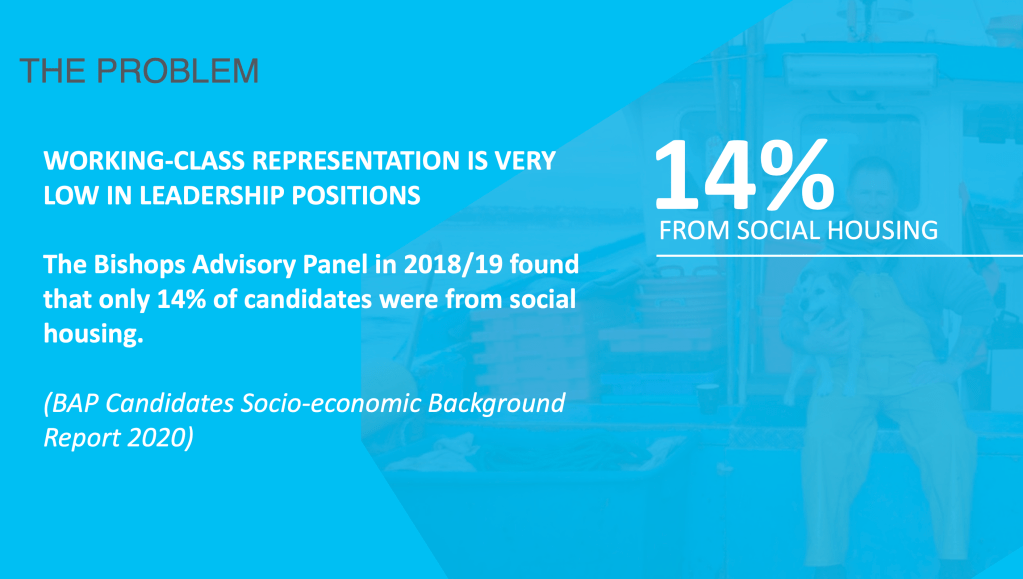
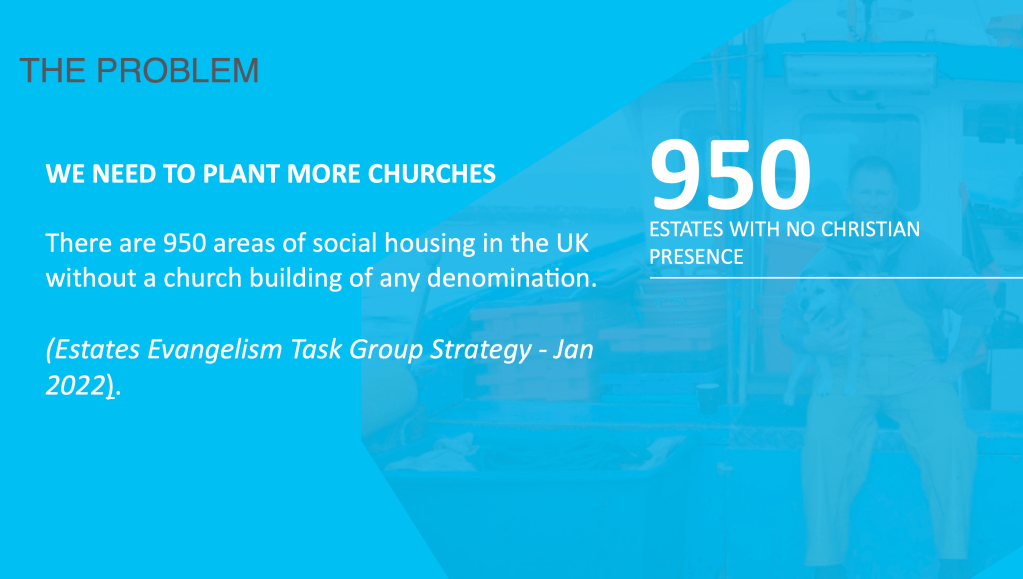
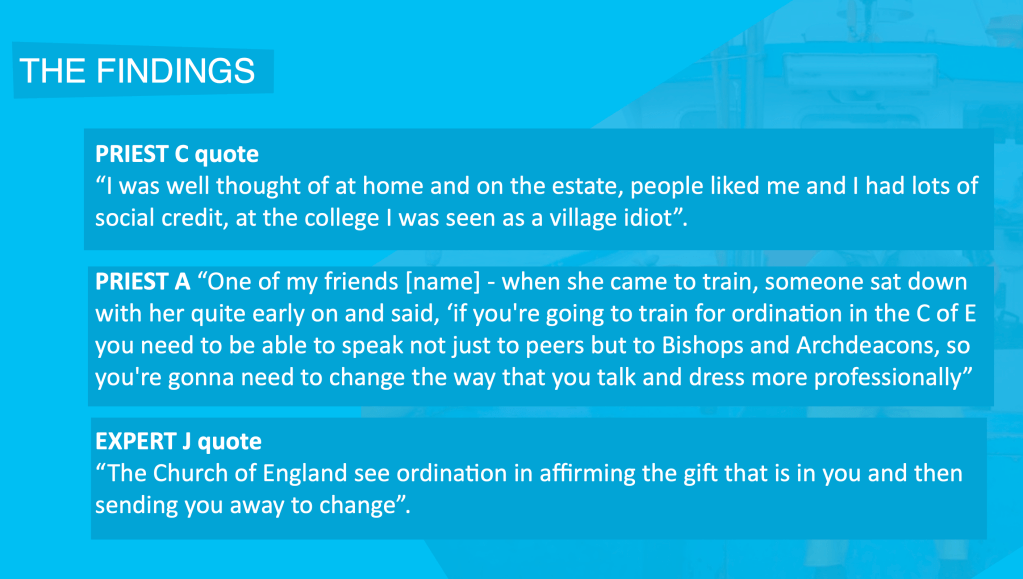
The over all findings were that the working-class, who function with a different set of values and world view, do not feel valued in the Church of England and that the Ordination to Priesthood route forces people to change into something they are not.
Working-class priests said such things as,
 urbanmission.uk